Cream of Chicken Soup vs. Chicken Broth: Key Differences
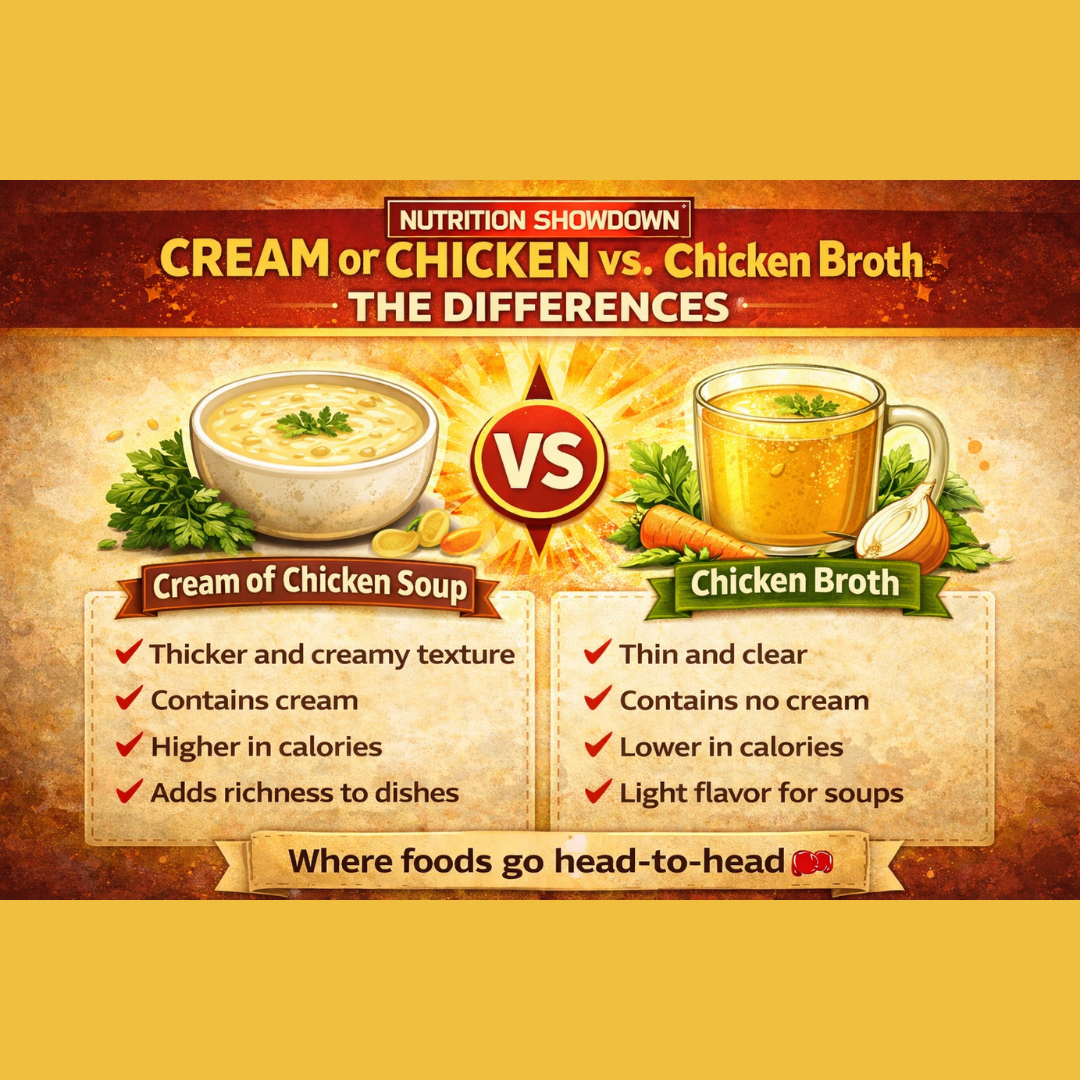
You reach for chicken broth, the recipe calls for cream of chicken soup, and suddenly you're wondering if it actually matters.
It does. One is thin and built for layering flavor. The other is thick, creamy, and designed to coat everything it touches. They look similar on the shelf, but swap one for the other without adjusting your recipe and you'll end up with watery casserole or a sauce so thick you need a chisel to serve it.
The main difference comes down to texture, fat content, and what each one is engineered to do in your cooking. Cream of chicken soup is a condensed, ready-to-use base that adds body and a creamy texture. Chicken broth is a liquid foundation that builds flavor without changing consistency.
Here's everything you need to know to pick the right one every single time.
What Each One Actually Is (And Why It Matters)
Most people treat these two like cousins, but they're built for completely different jobs in the kitchen.
Understanding what goes into each product changes how you use them. Cream of chicken soup is a thickened, canned product made with chicken stock, flour or cornstarch, milk or cream, and seasonings. It's designed to add both flavor and a rich, creamy texture to recipes without extra steps. You'll find it in the soup aisle next to other condensed soups, and it's a staple in casseroles, slow cooker meals, and creamy sauces.
Cream of chicken soup:
Condensed and thick right out of the can
Contains added dairy (milk, cream, or milk solids)
Includes thickening agents like flour or modified food starch
Ready to use as a sauce base or soup starter
Higher in calories and fat due to dairy content
Chicken broth:
Thin, liquid consistency with no added thickeners
Made by simmering chicken bones, chicken meat, vegetables, and aromatics like bay leaves
Can be store-bought or homemade chicken stock
Used as a cooking liquid, soup base, or flavor enhancer
Lower in calories and fat, cleaner ingredient list
Cream of chicken soup acts like a shortcut ingredient that does two things at once: it flavors your dish and creates a creamy consistency without you needing to make a roux or add heavy cream separately. Chicken broth does one thing exceptionally well, it infuses dishes with savory, chicken-forward flavor while keeping the texture light and the ingredient list simple.
If you're making chicken and rice, broth keeps it fluffy and flavorful. If you're making chicken and rice casserole, cream of chicken soup binds everything together with that signature creamy coating. That's the difference in action.
Texture and Consistency: The Dealbreaker
This is where recipes live or die.
Cream of chicken soup is thick, velvety, and coats every ingredient it touches. It's engineered to cling. When you stir it into a casserole or slow cooker meal, it doesn't just add flavor, it becomes the sauce. That creamy texture comes from dairy and starch working together, giving you that comfort-food consistency without extra prep. If your goal is a dish that holds together on the plate with a rich, cohesive sauce, this is your move.
Chicken broth is thin, pourable, and built to hydrate and flavor without changing texture. It sinks into grains, deglazes pans, and creates soups that stay liquid. There's no creaminess, no body, no thickening power. What you see is what you get: a flavorful liquid that enhances without taking over. If you want control over your dish's final consistency, broth gives you that flexibility. You add the cream, butter, or flour later if you want it.
Here's what happens when you swap them without adjusting: use broth where a recipe calls for cream of chicken soup and your casserole turns into chicken soup with stuff floating in it. Use cream of chicken soup where broth is called for and your risotto becomes a gloppy, over-thickened mess.
The texture difference isn't subtle. It's the entire point of each product. Cream of chicken soup thickens and binds. Broth flavors and loosens. Knowing which one your recipe actually needs saves you from having to fix a dish mid-cook.
Flavor Profile: Rich vs. Clean
Both bring chicken flavor, but the way they deliver it is night and day.
Cream of chicken soup has a rich flavor that's rounded out by dairy and seasoning. It tastes comforting, a little indulgent, and slightly salty. The creaminess softens the chicken flavor and makes it feel more like a complete sauce than a pure stock. It's designed to be a one-can solution: flavor, body, and seasoning all in one. The downside? It can taste a bit processed if you're sensitive to that, and the flavor is harder to customize because it comes pre-seasoned.
Chicken broth delivers a cleaner, more concentrated chicken-forward taste. Homemade chicken stock made from simmering chicken bones with vegetables and bay leaves has a deeper, more complex flavor than most store-bought versions, but even grocery store broth gives you a straightforward, savory base that doesn't compete with other ingredients. Because it's not pre-thickened or loaded with dairy, the flavor comes through sharper and more distinct. You control the seasoning, the richness, and the final flavor balance.
If you're building layers of flavor (like in a soup or braise), broth is the better choice. It supports without overpowering. If you want an all-in-one ingredient that brings both flavor and creaminess with minimal effort, cream of chicken soup does that job faster. Homemade broth or homemade chicken stock will always win on flavor complexity, but cream of chicken soup wins on convenience and comfort-food richness.
The key difference: broth is a canvas. Cream of chicken soup is a finished painting. Choose based on how much creative control you want.
Nutritional Profiles: What You're Actually Eating
If you care what's going into your body, this part matters more than convenience.
| Per 1 Cup Serving | Cream of Chicken (condensed) | Chicken Broth |
|---|---|---|
| Calories | 180-230 | 10-40 |
| Fat | 11-14 g | 0-2 g |
| Sodium | 800-900 g | 400-900 g |
| Carbs | 12-15 g | 0-2 g |
| Protein | 3-5 g | 1-6 g |
The calorie and fat gap is massive. Cream of chicken soup packs dairy and thickeners, which means more calories, more fat, and more carbs. If you're watching macros or trying to keep a dish lighter, that matters. One can of cream soup in a casserole that serves six still adds 30-40 calories and 2g of fat per serving, and that's before you add cheese, butter, or anything else.
Chicken broth is essentially calorie-free flavor. Homemade broth made from chicken bones also delivers collagen, minerals, and amino acids that bring legitimate health benefits like joint support and gut health. Store-bought versions are lighter on those perks but still give you a clean, low-calorie option that doesn't mess with your macros.
The ingredient list tells the story too. Broth is usually chicken stock, salt, and maybe some vegetable extracts. Cream of chicken soup includes modified food starch, soybean oil, flavoring agents, and preservatives. If you're trying to eat cleaner, broth (especially homemade soup or homemade broth) is the better choice every time.
That said, if you're making comfort food and richness is the goal, the extra calories in cream of chicken soup are doing exactly what they're supposed to: making the dish taste indulgent. Just know what you're trading.
Best Ways to Use Each One in Real Cooking
Here's where theory meets your actual dinner plans.
Cream of chicken soup shines in:
Casseroles: Chicken and rice, green bean casserole, tater tot hotdish. It binds everything and creates that creamy, cohesive texture.
Slow cooker meals: Dump-and-go recipes where you need a sauce without extra steps. It thickens as it cooks and coats chicken or pork perfectly.
Quick creamy sauces: Thin it with a little milk and pour it over baked chicken, pork chops, or biscuits for an instant gravy-style topping.
Pot pies: It creates the thick, savory filling that holds up under a crust without leaking everywhere.
Chicken broth works best for:
Soups and stews: Any time you want a liquid base that carries flavor without adding thickness. Homemade chicken stock makes this even better.
Cooking grains: Rice, quinoa, couscous, or risotto. Swap cold water for broth and your side dish instantly tastes better.
Deglazing pans: After searing chicken or vegetables, pour in broth to lift the browned bits and create a quick pan sauce.
Braising: Low and slow cooking where you want the liquid to reduce and concentrate flavor, not thicken into a sauce.
Homemade soup: The foundation of chicken noodle, tortilla soup, or any broth-based recipe where you're building flavor from scratch.
If your recipe says "creamy" anywhere in the title, cream of chicken soup is probably the right call. If it says "broth-based," "light," or involves grains or pasta, reach for chicken broth. And if you're stuck between the two, ask yourself: do I want this dish to have a sauce, or do I want it to have a flavorful liquid? That question solves 90% of the confusion.
Time, Convenience, and Real-Life Tradeoffs
One takes less time. The other gives you more control. Pick your priority.
Cream of chicken soup is a convenience ingredient designed to save you steps. Pop the can, dump it in, stir, and you've got a creamy base without making a roux, whisking in cream, or worrying about lumps. It's a one-ingredient shortcut that delivers consistent results every time. If you're cooking on a weeknight or feeding a crowd without a lot of prep time, this is a lifesaver. The tradeoff? You're locked into the flavor and seasoning that comes in the can. You can't dial it back or customize it much without diluting the whole thing.
Chicken broth (especially homemade broth) gives you total control but requires more effort if you're making it from scratch. Simmering chicken bones, vegetables, and bay leaves for a few hours creates a good base with deep flavor and real health benefits, but it's not happening on a Tuesday night unless you batch-cooked it over the weekend. Store-bought broth is faster, but you're still responsible for building the sauce, adding the cream, or thickening the liquid yourself. You can also choose a low-sodium broth if sodium is a concern.
Here's the real-world decision: if you've got 20 minutes and need dinner done, cream of chicken soup wins. If you've got time to build flavor or you're meal-prepping, homemade chicken stock or even store-bought broth gives you more flexibility and cleaner ingredients. Neither is wrong. They just serve different cooking styles.
And here's a pro move: keep both in your pantry. Use broth for soups and grains, cream of chicken soup for casseroles and slow cooker dumps. You're not picking a side for life, you're picking the right tool for the job.
When to Swap (And When Not To)
Sometimes you can get away with a substitution. Other times, you'll wreck the dish.
You can swap cream of chicken soup for broth if: You add a thickening agent (like a roux or cornstarch slurry) and some cream or milk to replicate the texture. Use about 1 cup of broth plus 2-3 tablespoons of flour and 1/4 cup of cream for every can of soup. This works great when you want more control over seasoning or a cleaner ingredient list but still need that creamy consistency.
You can swap broth for cream of chicken soup if: You're okay with a thinner, lighter result. Add extra broth and skip the thick sauce entirely. This works in soups where the creaminess was optional anyway, or in casseroles where you're fine with a more broth-based, less gooey texture.
Don't swap them without adjusting if:
The recipe specifically relies on the thickness of cream soup to hold ingredients together (like a pot pie or baked casserole)
You're making a dish where the broth is supposed to stay thin and sippable (like chicken noodle soup)
The flavor profile would be thrown off (cream soup is richer and more seasoned, broth is cleaner and more neutral)
The best swap isn't always a direct one. Sometimes it's smarter to adjust the whole recipe slightly than to force one ingredient to do a job it wasn't designed for. If you've got both on hand, use the one the recipe calls for. If you're out of one, tweak the recipe to fit what you've got.
The Final Verdict
If you can only keep one, here's the call: chicken broth is the better choice for versatility and health.
Broth works in more kinds of soup, has a cleaner ingredient list, delivers real health benefits (especially if you make your own from chicken bones), and gives you total control over flavor and texture. You can use it to build everything from a light soup to a creamy sauce, and it doesn't lock you into a pre-seasoned, pre-thickened formula. Whether you buy it at the grocery store or simmer your own homemade chicken stock, it's the more flexible, more nutritious option.
But cream of chicken soup absolutely has a place in your pantry if you cook casseroles, slow cooker meals, or need fast comfort food. It's a shortcut ingredient that works, and there's no shame in that. It saves time, delivers consistent results, and makes weeknight cooking easier. Just know what you're getting: more calories, more sodium, and less flexibility.
For most home cooks, the right answer is keeping both. Use broth as your go-to for soups, grains, and building flavor. Use cream of chicken soup when you need a creamy base fast and don't want to fuss with making a sauce from scratch. They're not competitors, they're teammates.
If you had to pick one and never look back, broth wins on nutrition, versatility, and long-term value. But the real win is knowing exactly when each one makes your cooking better.