Bottled Lime Juice vs. Fresh: A Detailed comparison
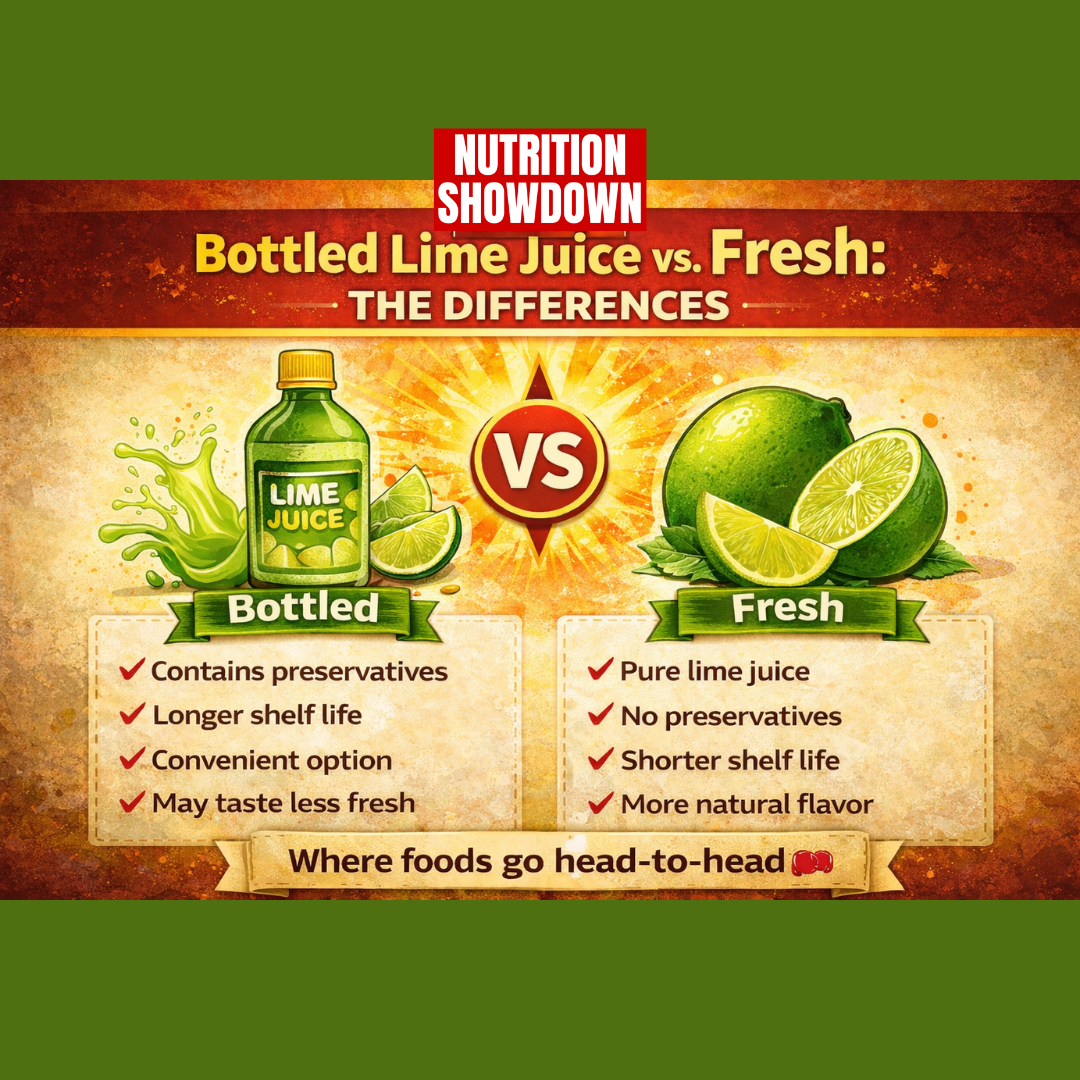
That plastic bottle of lime juice sitting in your grocery store cart might seem like a smart shortcut, but your next margarita is about to tell you otherwise.
Most people grab bottled lime juice without a second thought, thinking it's basically the same as fresh-squeezed lime juice just easier. The food industry has done a brilliant job convincing us that convenience and quality go hand in hand. But when you're standing in your kitchen wondering why your guacamole tastes flat or your ceviche lacks that bright punch, the answer is probably sitting in that bottle.
The real question isn't whether fresh limes take more effort (they do), but whether that effort translates to results worth the extra three minutes of squeezing. From shelf life to citric acid content, from natural flavors to superior flavor profiles, the differences between bottled juice and fresh juice run deeper than most home cooks realize.
By the time you finish reading this comparison, you'll know exactly which option deserves space in your refrigerator and which one belongs back on the shelf.
What You're Actually Comparing: The Real Differences Start at the Source
Here's what most people miss when they reach for that convenient bottle: you're not just choosing between two forms of the same ingredient.
Fresh limes are whole fruit that you juice yourself, capturing everything the lime has to offer in that exact moment, including essential oils from the peel, natural sugars, and volatile flavor compounds that start breaking down the second they're exposed to air. Bottled lime juice is a manufactured product designed for long-term storage, which means it's been processed, preserved, and often altered to maintain consistency and prevent spoilage over months or even years sitting on a grocery store shelf.
The main ingredient in both might technically be lime juice, but the supporting cast tells a very different story:
Fresh limes: Fruit, your hands, a citrus squeezer. That's it. You get pure juice with all the natural oils, acids, and flavor compounds intact exactly as nature designed them.
Bottled lime juice: Reconstituted lime juice concentrate, water, citric acid for tartness, sodium benzoate or potassium sorbate as preservatives, and sometimes "natural flavors" to compensate for what processing stripped away.
When you see "real lime" on a bottle label, it usually means the product started with actual limes before processing, concentration, and reconstitution. But calling it "real lime" is like calling instant coffee "real coffee," it's technically accurate but practically misleading about what you're actually getting.
The bottom line: Fresh limes give you the full experience. Bottled juice gives you a shelf-stable approximation that prioritizes convenience and longevity over authentic flavor.
The Taste Test Nobody Wants to Admit
If you've ever done a side-by-side taste test, you already know the truth.
Fresh-squeezed lime juice has a bright, complex flavor profile with layers of tartness, subtle sweetness, and aromatic notes that make your taste buds actually wake up. There's a reason professional chefs and bartenders reach for fresh limes, the flavor difference isn't subtle, it's the foundation of whether a dish or drink actually works. Bottled lime juice tastes one-dimensional, aggressively sour without the balance, and often carries a slightly metallic or chemical aftertaste from preservatives.
What causes the flavor gap:
The moment you cut into a fresh lime, enzymes and oxygen start breaking down delicate flavor compounds. Bottled juice has already lost most of these volatile elements during processing and storage. The citric acid added to bottled versions mimics tartness but can't replicate the nuanced acidity of fresh juice. Preservatives do their job keeping the juice from spoiling, but they also contribute off-flavors that your palate picks up immediately in applications where lime is a star ingredient.
In dishes where lime plays a supporting role (like a marinade with ten other ingredients), bottled juice might fly under the radar. But in a margarita, ceviche, key lime pie, or fresh guacamole where lime is the main event, the difference between fresh and bottled is the difference between a dish that sings and one that just sits there.
Here's the honest verdict: If you care what your food tastes like, fresh lime juice wins every single time. If you're okay with "close enough," bottled will get you by, but you're sacrificing the best part of using lime in the first place.
Shelf Life and Storage: Where Bottled Juice Actually Wins
Let's give bottled lime juice credit where it's actually due: it will outlast fresh limes by months.
Fresh limes and fresh lime juice:
Whole fresh limes last 2-4 weeks in the refrigerator, sometimes less if they were already sitting at the store for a while
Fresh key limes are even more delicate, often lasting just 1-2 weeks
Once you juice fresh limes, the clock speeds up dramatically; fresh-squeezed lime juice holds peak flavor for 2-3 days in the fridge, and by day five it starts tasting noticeably dull
Bottled lime juice:
Unopened bottles last 12-18 months at room temperature thanks to preservatives and processing
Once opened, bottled juice stays usable for 4-6 months in the refrigerator without major quality loss
You can keep a bottle on standby for those spontaneous cooking moments without worry
This is the trade-off that makes bottled juice tempting for people who only use lime occasionally. If you're someone who needs lime juice once every few weeks, buying a bag of fresh limes means watching half of them shrivel and die in your crisper drawer. Bottled juice eliminates that waste and gives you reliable access whenever you need it.
But here's what that convenience costs you: The reason bottled juice lasts so long is precisely because it's been stripped of the elements that make fresh juice special. Shelf life and superior flavor are inversely related in this case. You gain storage time by sacrificing the very thing you wanted lime for in the first place.
If you cook or make cocktails regularly and go through limes quickly, fresh is the best choice without question. If you're a sporadic user who hates waste, bottled juice makes practical sense, just know you're trading flavor for convenience.
Price Breakdown: The Real Cost Per Squeeze
The price tag tells one story, but cost per use tells another.
A typical bottle of lime juice at the grocery store runs $2.50 to $4.50 for 8-15 ounces depending on brand and quality. Fresh limes cost anywhere from $0.30 to $0.70 each, and a single lime yields roughly 1.5 to 2 tablespoons of juice (that's 0.75 to 1 ounce per lime).
Let's do the math on a recipe that calls for 1/4 cup (2 ounces) of lime juice:
Fresh limes: You'll need 2-3 limes depending on size and juiciness. At $0.50 per lime, that's $1.00 to $1.50 for a quarter cup of juice.
Bottled juice: A $3.50 bottle with 12 ounces gives you six quarter-cup servings, which works out to about $0.58 per serving.
On paper, bottled juice costs roughly half as much per ounce. But this calculation ignores three critical factors: waste from fresh limes that go bad before you use them, the superior flavor that makes your dish actually worth eating, and the fact that you often need more bottled juice to achieve the same flavor impact because it's weaker and less aromatic.
Here's the smarter way to think about cost: If you're making something where lime flavor truly matters, using bottled juice and being disappointed means you wasted the cost of every other ingredient too. Spending an extra dollar on fresh limes to make your $8 of ingredients taste incredible is the actual best value.
For high-volume uses like a party where you're making three pitchers of margaritas, the cost difference adds up and fresh becomes notably more expensive. For everyday cooking, the price gap is smaller than you think when you factor in waste and flavor performance.
Ingredient Quality and What's Actually Inside
Reading the label on bottled lime juice is like reading the fine print on any processed food: the truth is in the details.
Most bottled lime juice starts as concentrated lime juice that gets reconstituted with water. The concentration and reconstitution process is cheaper to ship and store, but it strips away volatile oils and aromatic compounds that make fresh juice taste alive. To compensate, manufacturers add citric acid to boost tartness and natural flavors to mimic what was lost, but citric acid is a one-note sour punch that lacks the complexity of real lime acidity.
Typical bottled lime juice ingredients:
Lime juice from concentrate
Water
Citric acid (often more than what naturally occurs in limes)
Sodium benzoate and/or potassium sorbate (preservatives to extend shelf life)
Natural flavors (vague industry term that can mean almost anything derived from plant or animal sources)
Fresh lime juice ingredients: Juice from fresh limes. That's it.
When you squeeze fresh limes, you're getting naturally occurring citric acid in balanced proportion with other organic acids like malic acid, along with essential oils, natural sugars, vitamins, and enzymes that haven't been heat-treated or chemically preserved. The result is a living ingredient that interacts with other flavors in your recipe the way ingredients are supposed to.
The preservatives in bottled juice are generally recognized as safe and won't hurt you, but they do contribute to that flat, slightly chemical aftertaste that gives away the fact you used a bottle instead of real fruit.
Bottom line: If you care about clean ingredient lists and minimally processed food, fresh limes are the obvious winner. If you're fine with stabilizers and flavor additives in exchange for convenience, bottled juice won't hurt you but it will change what your food tastes like.
Best Use Cases: When Each Option Actually Makes Sense
Not every recipe demands the same level of lime commitment.
When fresh limes are non-negotiable:
Cocktails: Margaritas, mojitos, caipirinhas, or any drink where lime is a primary flavor. The difference between fresh and bottled here is the difference between a drink people remember and one they tolerate.
Ceviche: The acid from lime is actually "cooking" the seafood, and you need the full aromatic complexity of fresh juice to make the dish work.
Key lime pie: If you're using real fresh key limes, don't ruin it with bottled juice. The entire point of this dessert is showcasing that specific citrus flavor.
Fresh salsas and guacamole: When lime is one of only five ingredients, every single one has to pull its weight. Bottled juice will make your guac taste like it came from a cafeteria.
Finishing touches: Squeezing fresh lime over tacos, grilled fish, or Thai curry right before serving adds aromatic oils from the peel and brightness that bottled juice simply cannot deliver.
When bottled juice is a reasonable choice:
Marinades with lots of competing flavors: If you're marinating chicken with soy sauce, garlic, ginger, and sesame oil, the nuance of fresh lime gets buried anyway.
Baking where lime is a background note: Certain cake batters or glazes where lime plays a subtle supporting role rather than starring.
Large-batch cooking: If you're making ten gallons of chili and need a splash of acid to balance it out, bottled juice is practical.
Emergency backup: Keeping a bottle in the pantry for the occasional moment when a recipe calls for lime and you don't have fresh on hand is smarter than skipping it entirely.
Think of bottled lime juice like garlic powder versus fresh garlic. Sometimes garlic powder is fine. But if you're making garlic bread or a garlic-forward pasta, you'd never use powder and expect the same result. The same logic applies here.
The great suggestion: Keep fresh limes on hand for anything where lime is in the spotlight, and save bottled juice for supporting roles or true emergencies.
Nutritional Content: What You Gain and Lose
Fresh lime juice and bottled juice aren't nutritional powerhouses either way, but there are differences worth noting.
Fresh-squeezed lime juice delivers vitamin C, small amounts of potassium, and beneficial plant compounds like flavonoids that have antioxidant properties. The vitamin C content in fresh juice starts degrading immediately after juicing, but if you use it within a day or two, you're still getting meaningful amounts. Bottled lime juice loses much of its vitamin C during processing and storage, though some brands add it back as ascorbic acid (a synthetic form of vitamin C used as both a nutrient and preservative).
Here's the nutritional reality check:
Fresh lime juice: About 10-12 mg of vitamin C per ounce, minimal sodium, no added preservatives or chemicals
Bottled lime juice: Vitamin C content varies wildly by brand and age of the bottle, often contains 5-15 mg of added sodium per serving from preservatives, may include added ascorbic acid to boost numbers on the label
If you're drinking lime juice for health reasons, neither option is going to transform your wellness routine, but fresh gives you actual nutrients in their natural form rather than degraded and chemically supplemented versions.
The bigger health consideration is what the preservatives and additives do to your gut over time. Most people tolerate sodium benzoate and potassium sorbate just fine, but some individuals report digestive sensitivity to these compounds, especially in regular use.
The verdict: Fresh lime juice is marginally better nutritionally, but unless you're chugging lime juice by the gallon, the health difference is minor. The flavor difference is major.
The Final Verdict
Fresh limes win this comparison in every category that actually matters for flavor, quality, and cooking performance.
If you care about how your food tastes, if you're making cocktails that people will judge you for, or if you're cooking any dish where lime plays a starring role, fresh-squeezed lime juice isn't just the better choice, it's the only real choice. The superior flavor, the aromatic oils, the complexity, and the absence of preservatives and chemical additives make fresh limes worth every extra second of effort and every extra cent of cost.
Bottled lime juice has exactly one advantage: convenience paired with long shelf life. That's a legitimate benefit if you rarely use lime and hate wasting food, but it doesn't change the fact that you're compromising on the very reason you wanted lime in the first place.
Here's the honest recommendation: Buy fresh limes for anything that matters. Keep a bottle of decent-quality bottled juice in the back of your pantry as an emergency backup for the rare occasion when you run out of fresh, but never let that bottle become your default. Your taste buds, your dinner guests, and your reputation as someone who knows their way around a kitchen will thank you.
The best lime juice is the one you squeeze yourself. Everything else is just a compromise you make when you're out of time, out of fresh limes, or out of willingness to care about what you're eating.