Cocktail Onions vs. Pearl Onions: Key Differences
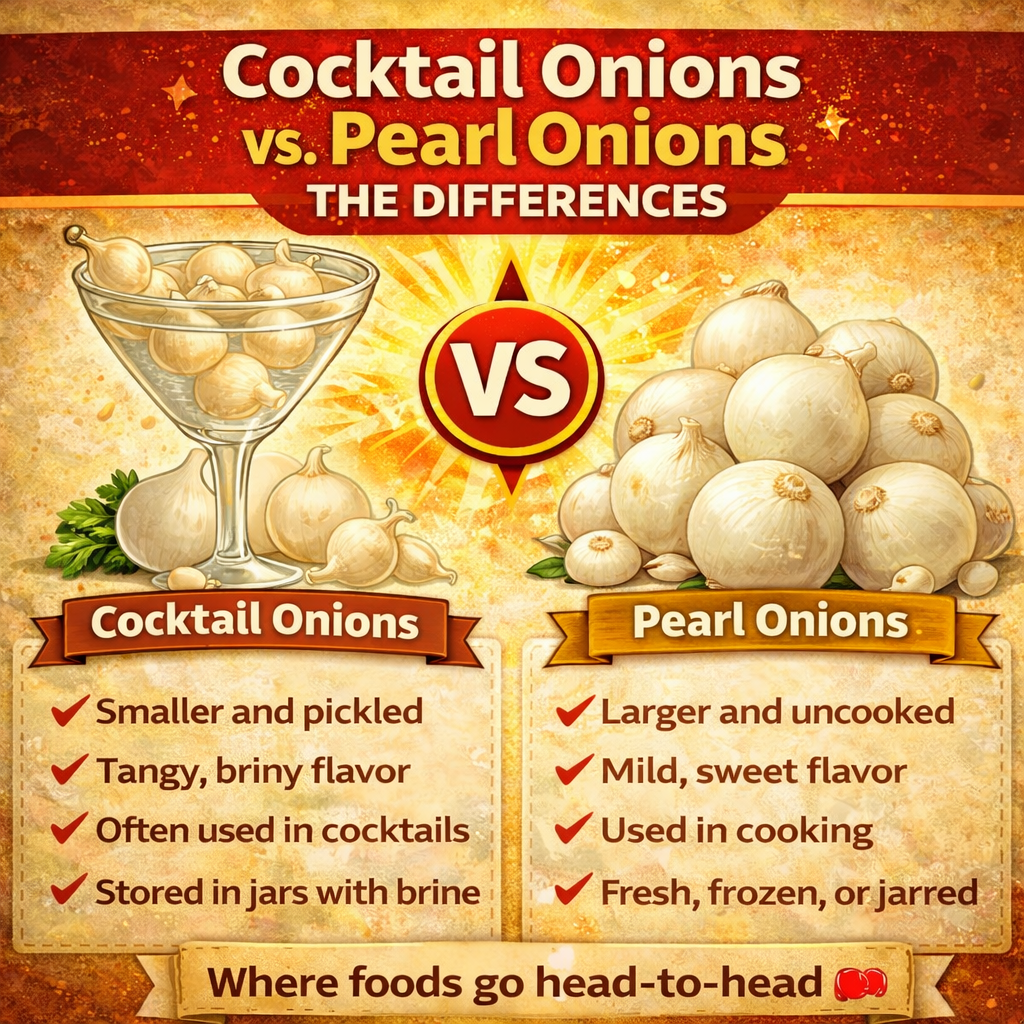
You reach for the jar at your local grocery store, convinced you grabbed the right onions, only to ruin your Gibson martini or your side dish an hour later.
Cocktail onions and pearl onions look nearly identical in their jars. Both are small, white, and bite-sized. Yet what happens to them before they hit the shelf and how you use them couldn't be more different.
One belongs in your glass, pickled in brine with a sharp, tangy bite that cuts through gin or vodka. The other starts fresh, destined for roasting, braising, or simmering into rich, caramelized sweetness alongside your main course.
Mixing them up means disappointing drinks and bland dinners, so let's clear up the confusion once and for all.
What Each Onion Actually Is and Where It Comes From
Most people assume these are the same onion with different labels.
The truth is more interesting. Pearl onions are simply immature white onions harvested early, before they grow beyond one inch in diameter. You'll find them in raw form at farmers markets or already peeled in the frozen section. They're the same species as the yellow onions and white onions in your pantry, just picked young. Because they're harvested small, they pack a mild, slightly sweet flavor that intensifies beautifully when cooked. You can also find pickled pearl onions, but those are a preserved version of the raw vegetable, not a different product entirely.
Cocktail onions, on the other hand, start as pearl onions but undergo a complete transformation. They're pickled in a brine made from vinegar, salt, sugar, and sometimes turmeric, which gives them that signature bright white color and sharp, acidic punch. This pickling process is what defines them. You won't find cocktail onions in raw form because the brining is what makes them cocktail onions in the first place. They exist for one purpose: to garnish savory cocktails like the Gibson martini, adding a crisp, briny contrast to the booze.
So what's the real distinction? Fresh pearl onions are a raw ingredient you cook with. Cocktail onions are a condiment you serve. One transforms under heat, the other delivers flavor straight from the jar. If you're making a drink, you want the pickled sharpness. If you're building a side dish, you need the fresh, cookable base.
Flavor Profiles and How They Behave in Food and Drinks
Fresh pearl onions offer a savory flavor that's gentle and slightly sweet when raw, but they completely change character once you apply heat. Roast them with olive oil and they caramelize into golden, jammy bites. Braise them in stock and they soak up liquid like flavor sponges, turning silky and rich. Toss them into a stew and they add body and sweetness without overpowering the other ingredients. Their texture holds up well under long cooking times, making them an excellent addition to slow-cooked dishes.
Cocktail onions deliver an entirely different experience. The brine gives them a sharp, acidic bite that cuts through fatty or boozy flavors. They're crunchy, tangy, and assertive. Drop one into a Gibson martini and it doesn't just sit there looking pretty. It adds a savory punch that balances the botanicals in gin or the clean burn of vodka. Some people eat them straight from the jar as part of antipasto trays, where their pickled intensity plays well against cheeses, olives, and cured meats.
Here's the key difference in behavior: fresh pearl onions absorb and transform. Cocktail onions punctuate and contrast. You wouldn't want to cook a cocktail onion because the heat would dull the brine and leave you with a limp, salty mess. And you wouldn't want to drop a raw pearl onion in your drink because it lacks the acidity and crunch that makes a proper garnish work.
Pearl onions in cooking: Sweet, caramelizable, adaptable to braising, roasting, or sautéing
Cocktail onions in drinks: Sharp, briny, crunchy, best served cold and uncooked
Texture after preparation: Pearl onions soften and melt into dishes; cocktail onions stay firm and crisp
If you're building flavor layers in a recipe, you want pearl onions. If you're adding a garnish with attitude, grab the cocktail onions. They're not interchangeable, and trying to swap them will leave you with a confused palate.
Preparation Methods and What You're Actually Buying
The difference between these two onions becomes crystal clear when you look at how much work each one requires.
Fresh pearl onions are notorious for being tedious to prep. Their papery skins cling tight, and peeling a pound of them by hand is a special kind of kitchen torture. The traditional method involves blanching them in boiling water for about 60 seconds, then shocking them in cold water to loosen the skins. After that, you trim the root end and squeeze each onion out of its skin. It's time-consuming but necessary if you're using them in raw form. The good news? You can skip all of that by buying them pre-peeled and frozen at your local grocery store. Frozen pearl onions are already blanched and peeled, which saves you 20 minutes of frustration and delivers nearly identical results once cooked.
Cocktail onions require zero prep because someone already did the hard part. They come pre-pickled in jars, ready to spear with a toothpick and drop into your drink. The brine does all the work, flavoring and preserving the onions so they stay crisp for months. You don't blanch them, you don't peel them, you don't cook them. You open the jar and use them. That convenience is part of what you're paying for, along with the specific flavor profile the pickling process creates.
If you wanted to make cocktail onions at home, you'd start with fresh pearl onions, peel them using the blanching method, then submerge them in a brine solution for at least a week. Most people don't bother because the store-bought versions are inexpensive, shelf-stable, and consistently good.
Buying fresh vs. pickled also changes how you store them. Fresh pearl onions belong in a cool, dry place if they're whole and unpeeled, or in the fridge if they've been prepped. They'll last about a week fresh, or several months if you buy them frozen. Cocktail onions live in your pantry until you open the jar, then they move to the fridge where the brine keeps them good for months. The preparation gap here isn't just about time. It's about whether you're buying an ingredient or a finished product.
Best Uses in the Kitchen and Behind the Bar
For fresh pearl onions:
Roasted as a side dish: Toss them with olive oil, salt, and pepper, then roast at 400°F until caramelized and golden. They pair beautifully with roasted meats or can stand alone as a simple, elegant side.
Braised in stews and braises: Add them to beef bourguignon, coq au vin, or any slow-cooked dish where you want pockets of sweet, tender onion that soak up the braising liquid.
Glazed with butter and herbs: Sauté them in butter with a pinch of sugar and fresh thyme until they turn glossy and golden. This is a classic French preparation that works with almost any protein.
Pickled at home: If you want to make your own pickled pearl onions with custom spices or less sugar, fresh pearl onions are your starting point.
For cocktail onions:
Gibson martini: The classic use. A gin or vodka martini with a cocktail onion garnish instead of an olive or lemon twist. The brine adds a savory edge that makes the drink feel more substantial.
Bloody Mary garnish: Thread a cocktail onion onto a skewer along with olives, pickles, and celery for a loaded Bloody Mary garnish that doubles as a snack.
Antipasto trays: Serve them alongside olives, cheeses, cured meats, and pickled vegetables. Their sharp, briny flavor cuts through rich, fatty items and adds textural contrast.
Dirty martini twist: Some bartenders add a splash of cocktail onion brine to a dirty martini for an extra layer of savory complexity.
Where the line blurs: You can pickle fresh pearl onions to make a homemade version of cocktail onions, but you can't take cocktail onions and turn them into fresh pearl onions. The pickling is a one-way street. And while you technically could cook with cocktail onions, the vinegar and brine would overpower most dishes and leave you with a sour, unbalanced result. Stick to their intended lanes and both onions perform beautifully.
Different Types of Onions and Where These Two Fit In
Walk into any grocery store and you'll see red onions, yellow onions, white onions, shallots, scallions, and sometimes cipollini or Vidalia onions. Each has its own flavor profile, sweetness level, and best use case.
Yellow onions are the workhorses. They're sharp when raw, sweet when cooked, and used in everything from soups to sauces. Red onions are milder and slightly sweeter, often served raw in salads or on burgers because their color and crunch add visual appeal. White onions are crisper and sharper than yellow, commonly used in Mexican cuisine and salsas.
Pearl onions, as mentioned earlier, are just immature white onions. They belong to the same family as the most common types of onions you cook with every day. The difference is timing. Harvest them young and you get pearl onions. Let them grow and you get full-sized white onions.
Cocktail onions don't fit neatly into the "types of onions" category because they're a preparation method, not a variety. They're pearl onions that have been pickled, so they share the same genetic base as white onions but exist in a completely different form. Think of them as a finished product rather than a raw ingredient.
This distinction matters when you're shopping. If a recipe calls for pearl onions and you grab cocktail onions by mistake, you're bringing vinegar and brine into a dish that wasn't designed for it. If you're making a Gibson martini and you try to use a raw pearl onion, you'll end up with a crunchy, bland garnish that adds nothing to the drink. The category overlap can be confusing, but once you understand that one is a vegetable and the other is a condiment, the decision becomes obvious.
Storage, Shelf Life, and Cost Considerations
| Factor | Pearl Onions | Cocktails Onions |
|---|---|---|
| Storage (unopened) | Cool, dry place for 1-2 weeks, freezer for several months (if peeled) | Pantry for up to 2 years |
| Storage (opened) | Refrigerator for 3-5 days | Refrigerator for 3-6 months in brine |
| Typical cost per pound | $3-5 fresh, $2-4 frozen | $4-7 per jar (8-12 oz) |
| Prep time required | 15-20 minutes for peeling (fresh), $0 frozen | 0 minutes |
| Best for bulk buying | Yes, if buying frozen | Yes, shelf-stable and long-lasting |
Fresh pearl onions are cheaper if you're feeding a crowd. A two-pound bag of frozen pearl onions costs less than a single jar of cocktail onions and gives you enough onions to serve six to eight people as a side dish. But you're also committing to cooking them. If you buy fresh pearl onions and don't use them within a week, they'll start to soften and sprout.
Cocktail onions are the better value for occasional use. If you only make a Gibson martini once a month, a single jar will last you half a year in the fridge. The brine acts as a preservative, so there's no rush to use them up. You're paying a premium for the convenience and the pickling process, but the shelf life justifies it.
One hidden cost with fresh pearl onions is the time investment. If you buy them fresh and whole, you're signing up for a tedious peeling session. Frozen pearl onions eliminate that entirely, which is why most home cooks who use them regularly keep a bag in the freezer at all times.
The Final Verdict
This isn't a close call because these onions serve completely different purposes.
Cocktail onions win if you're making drinks or assembling charcuterie boards. They're purpose-built for garnishing savory cocktails, especially the Gibson martini, and their sharp, briny flavor is exactly what you want when you're cutting through gin, vodka, or tomato juice. They require zero prep, last for months, and deliver consistent results every time. If you're a home bartender or you enjoy Bloody Mary garnishes, keep a jar in your fridge. You won't regret it.
Fresh pearl onions win if you're cooking. They're more versatile, more affordable per serving, and they transform beautifully under heat. Roast them, braise them, glaze them, or pickle them yourself. They're an excellent addition to stews, side dishes, and any recipe where you want sweet, tender onions that hold their shape. Buy them frozen to skip the peeling hassle and you've got a pantry staple that works in dozens of dishes.
Don't try to substitute one for the other. A cocktail onion in your stew will taste like vinegar soup. A raw pearl onion in your martini will taste like crunchy nothing. Each onion has a clear lane, and trying to force them into the wrong role guarantees disappointment. Stock both if you cook and drink regularly. Otherwise, buy the one that matches what you're actually making and skip the other entirely.
The takeaway is simple. If it's going in a glass, grab the jar with the brine. If it's going on a plate, grab the bag from the freezer or produce section. Once you stop treating them as interchangeable, you'll get better results in both the kitchen and behind the bar.