Tofu vs. Paneer: Which One Wins for Weight Loss?
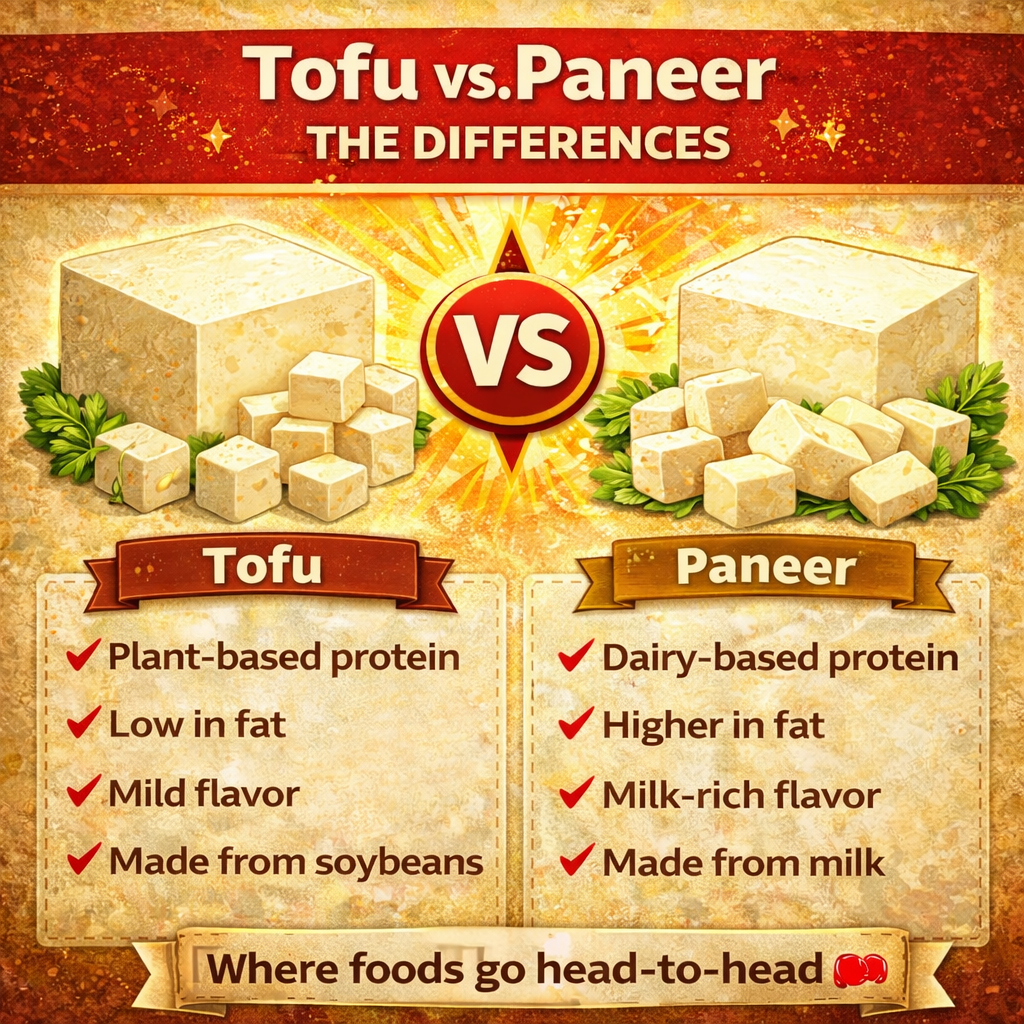
Walk into any health food store and you'll find tofu and paneer sitting side by side in the refrigerated section, both promising high protein and versatility.
However, these two proteins come from completely different worlds. One is a staple of Asian cuisines made from soybeans, the other is Indian cottage cheese crafted from dairy. Both are excellent sources of protein, but their nutritional profiles, health benefits, and impacts on your body couldn't be more different.
The tofu vs. paneer debate isn't just about taste or tradition. It's about cholesterol levels, essential amino acids, weight loss potential, and whether you're committed to vegan diets or open to dairy products.
And if you're trying to choose the healthier option for your meal plan, the answer depends entirely on what your body actually needs.
What You're Actually Comparing: Bean Curd Meets Indian Cottage Cheese
Tofu and paneer might look similar on your plate, but their origins tell completely different stories. Understanding what each one actually is helps you make smarter decisions about which protein deserves a spot in your kitchen.
Tofu, also called bean curd, comes from soybeans that are soaked, ground, boiled, and then coagulated to form curds. It's a cornerstone of Asian cuisines and has been feeding populations for over 2,000 years. The best part? It's entirely plant-based, making it a natural fit for vegan diets and anyone avoiding dairy products. Tofu comes in multiple textures ranging from silken to extra-firm, which means you can use it in everything from smoothies to stir-fries.
Paneer is Indian cottage cheese made by curdling heated milk with lemon juice or vinegar. The curds are strained, pressed, and formed into dense blocks. Unlike most cheeses, paneer doesn't melt when heated, which makes it perfect for grilling, frying, and tossing into curries. It's been a staple of Indian cuisine for centuries and delivers a rich, creamy flavor that tofu simply can't match. But because it's made from dairy, it's off-limits for anyone following strict plant-based diets.
Here's the fundamental split: tofu is your plant-based protein that works for vegans, vegetarians, and anyone watching their cholesterol. Paneer is your dairy-based option that brings authentic flavor and a firmer bite but comes with saturated fat and cholesterol you need to account for. If you're choosing between the two, you're really choosing between a plant-based alternative and a traditional dairy product, and that choice shapes everything from your macros to your meal planning strategy.
The Protein Power Breakdown: Grams of Protein and Amino Acid Profiles
Both tofu and paneer are marketed as excellent sources of protein, but the actual numbers and quality of that protein reveal some critical differences.
| Protein | Tofu (100 g firm) | Paneer (100 g) |
|---|---|---|
| Protein amount | 8-10 g | 18-20 g |
| Complete Protein (All essential amino acids) | Yes | Yes |
| Protein source | Plant-Based (Soy) | Animal-Based (Dairy) |
Paneer wins on raw protein volume, delivering nearly double the grams of protein per 100g serving. If you're trying to hit high protein targets for muscle building or recovery, paneer gets you there faster. But here's what matters just as much: both tofu and paneer are complete proteins, meaning they contain all nine essential amino acids your body can't produce on its own. That puts both of them ahead of most plant-based proteins like beans or grains, which require combining to hit the full amino acid spectrum.
For anyone on plant-based diets, tofu is one of the rare plant-based protein sources that delivers complete nutrition without needing a side of rice or quinoa. For those who eat dairy, paneer offers a denser protein hit in a smaller serving, which can make meal planning easier if you're trying to stay within calorie limits while maxing out protein intake.
The real question isn't which one has more protein. It's whether you need the extra grams paneer provides or if tofu's plant-based profile and lower calorie density make it the better option for your goals.
Calories, Fat, and the Weight Loss Factor
If weight loss is your goal, the calorie and fat differences between tofu and paneer become dealbreakers.
Tofu's low-calorie count is hard to beat. A 100g serving of firm tofu delivers roughly 70-80 calories with about 4-5g of fat, most of which is unsaturated. That means you can eat a generous portion, hit your protein targets, and still have plenty of calorie room left for other meals. The fat in tofu is primarily heart-healthy polyunsaturated and monounsaturated fat, which supports cardiovascular health rather than working against it.
Paneer, on the other hand, is calorie-dense. That same 100g serving clocks in at around 260-300 calories with 20-22g of fat, much of it saturated. If you're tracking macros or trying to create a calorie deficit, paneer can eat up a large chunk of your daily budget in a single meal. The high-fat content also means paneer is slower to digest, which some people find satiating but others find heavy.
For weight loss: Tofu is the better option. You get a good source of protein without the calorie load, which makes it easier to stay in a deficit while feeling full.
For muscle gain or bulking: Paneer's higher calorie and fat content can actually be an advantage, helping you hit surplus targets without needing to eat massive volumes of food.
For maintenance: Either works, but you'll need to plan your other meals around paneer's heavier macro footprint.
The choice here isn't just about numbers. It's about how each protein fits into your daily calorie strategy and whether you have room for paneer's richness or need tofu's efficiency.
Cholesterol Levels and Heart Health: Where the Gap Widens
This is where tofu pulls ahead for anyone concerned about cardiovascular health.
Tofu contains zero cholesterol. As a plant-based protein, it has no dietary cholesterol whatsoever, and the fats it does contain are mostly unsaturated, which research links to improved cholesterol levels and reduced heart disease risk. If you're managing high cholesterol or trying to prevent it, tofu is the safer bet. Some studies even suggest that soy protein can actively help lower LDL (bad cholesterol) when substituted for animal-based proteins.
Paneer, being a dairy product, contains cholesterol and saturated fat. A 100g serving delivers roughly 60-80mg of cholesterol and around 13-15g of saturated fat. For perspective, the American Heart Association recommends limiting saturated fat to about 13g per day for a 2,000-calorie diet. One serving of paneer can max that out. If you're already consuming other dairy products, meat, or eggs throughout the day, adding paneer pushes you over recommended limits fast.
What this means for you: If you have a family history of heart disease, high cholesterol, or you're actively trying to improve your lipid panel, tofu is the healthier option. If your cholesterol levels are solid and you're not at risk, paneer in moderation won't wreck your health, but it's still something to track. For anyone on plant-based diets or simply looking to cut back on animal products for heart health, tofu is the clear winner in this category.
Nutritional Value Beyond Protein: Vitamins, Minerals, and Hidden Benefits
Protein isn't the only thing that matters. The micronutrient profiles of tofu and paneer reveal some surprising advantages on both sides.
Tofu's micronutrient advantages:
Calcium (if fortified): Many brands fortify tofu with calcium, delivering up to 350mg per 100g, which rivals or beats the calcium content of paneer.
Iron: Tofu provides about 1.5-2mg of iron per 100g, which is valuable for anyone on vegan diets who may struggle to hit iron targets.
Isoflavones: These plant compounds in soy have been studied for potential benefits in hormone regulation, bone health, and even cancer prevention, though research is still evolving.
Paneer's micronutrient advantages:
Calcium: As a dairy product, paneer is naturally rich in calcium, delivering around 200-250mg per 100g without any fortification needed.
Vitamin B12: This is a critical nutrient for nerve function and red blood cell production, and it's nearly impossible to get from plant-based sources. Paneer provides a solid dose, making it valuable for vegetarians who avoid meat but still eat dairy.
Phosphorus and Zinc: Paneer delivers higher amounts of both, supporting bone health and immune function.
The practical takeaway: If you're vegan, tofu (especially fortified versions) gives you calcium and iron without animal products, though you'll still need to supplement B12. If you're vegetarian and eating dairy, paneer fills nutritional gaps that plant-based proteins can't touch, especially B12. Neither one is nutritionally complete on its own, but both bring unique health benefits that go beyond just grams of protein.
Cooking, Flavor, and Real-World Usability
Nutritional value means nothing if you hate eating it. Tofu and paneer behave completely differently in the kitchen, and those differences shape how you'll actually use them.
Tofu absorbs flavors like a sponge. It has almost no taste on its own, which is either its greatest strength or biggest weakness depending on how you cook. Marinate it, press it, fry it, bake it, or toss it into a curry, and it takes on whatever flavors you throw at it. Firm and extra-firm tofu hold up well in stir-fries and grilling, while silken tofu works beautifully in soups, smoothies, and desserts. The downside? If you undercook or underseason it, tofu tastes bland and disappointing.
Paneer brings its own rich, creamy flavor to every dish. It doesn't need much seasoning to taste good, and because it doesn't melt, you can grill it, pan-fry it, or toss it into high-heat dishes without it falling apart. It holds its shape beautifully in Indian cuisine classics like palak paneer, paneer tikka, and curries. The texture is firmer and denser than tofu, giving it a satisfying bite. The tradeoff? Paneer's strong dairy flavor limits how versatile it can be. You're not swapping it into Asian-inspired dishes or using it in sweet recipes the way you can with tofu.
Best uses for tofu: Stir-fries, scrambles, smoothies, vegan desserts, miso soup, Asian cuisines, and any dish where you want the protein to take on surrounding flavors.
Best uses for paneer: Curries, grilled skewers, Indian cuisine, salads where you want a firm cheese-like texture, and dishes where the protein should stand out rather than blend in.
If you want maximum flexibility across cuisines, tofu wins. If you want bold flavor with minimal effort, paneer is the better option.
The Final Verdict
For weight loss, heart health, and plant-based diets, tofu is the better option. Its low-calorie count, zero cholesterol, and complete amino acid profile make it the healthier choice for anyone trying to drop weight, manage cholesterol levels, or stick to vegan diets. The nutritional value is strong, the versatility across cuisines is unmatched, and the health benefits stack up without the baggage of saturated fat or dietary cholesterol.
For muscle building, vegetarians who eat dairy, and anyone prioritizing protein density, paneer takes the win. You get nearly double the grams of protein per serving, critical micronutrients like B12 that plant-based proteins can't provide, and a rich flavor that makes meals satisfying without much effort. The high-fat content is a drawback if you're watching calories, but if you're bulking or simply have room in your macros, paneer delivers serious nutritional value.
Here's the bottom line: if you're plant-based or health-focused, choose tofu. If you eat dairy and want maximum protein with authentic Indian flavor, choose paneer. Both are excellent sources of protein, but they serve different goals and different diets. Pick the one that matches your nutritional priorities, and you won't go wrong.
If you're serious about optimizing your protein intake, don't just pick one and ignore the other. Rotate both into your meal plan based on what your body needs that week. Tofu for lighter, lower-calorie days. Paneer when you need dense nutrition and bold flavor. That's how you get the benefits of both without limiting yourself to just one option.