Pork Chop vs. Pork Cutlet: Key Differences
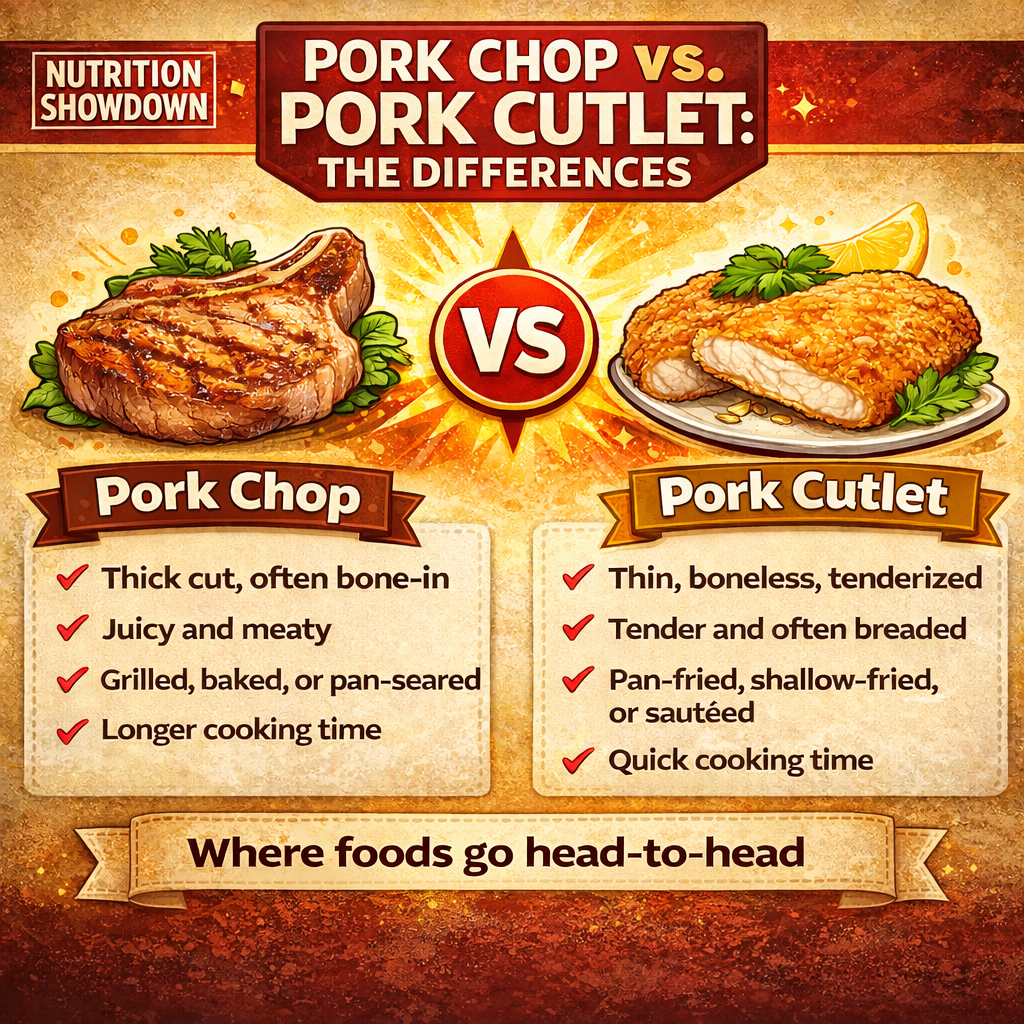
If you’ve ever browsed the meat aisle or visited a butcher shop, you’ve probably noticed several different types of pork cuts available. Among the most common are pork chops and pork cutlets. While these two options come from similar parts of the pig (the loin of the pig), the main difference lies in their thickness, preparation, and cooking method.
In this edition of Nutrition Showdown, we’re comparing pork chop vs. pork cutlet so you know exactly what you’re getting the next time you’re deciding between these two cuts of meat.
What Is a Pork Chop?
A pork chop is a thick cut of pork typically taken from the loin section of the pig. This area runs along the back and produces some of the most tender and flavorful various cuts of pork.
Pork chops can come in different cuts, including:
Bone-in chops
Boneless pork chops
Rib chops
Center-cut chops
Because they are thicker, pork chops are usually cooked using various methods such as grilling, baking, broiling, or pan-searing, depending on the type of chop.
One of the most common uses is a pan-seared pork chop, which creates a flavorful crust while keeping the inside juicy. This makes it a popular choice for meat lovers.
Many people consider pork chops a popular choice for dinner because they are easy to cook and widely available in grocery stores and butcher counters.
What Is a Pork Cutlet?
Pork cutlets are made by taking a thin slice of pork—usually from the loin or pork tenderloin—and pounding it flat with a meat mallet.
This process tenderizes the piece of meat and creates a thinner cut that cooks much faster than a pork chop.
Because pork cutlets are thin, they are often used for dishes like:
Breaded pork cutlets
Pork schnitzel
Pan-fried cutlets
Italian-style pork cutlets
These dishes typically involve quick cooking techniques such as frying or sautéing and can be coated in various herbs.
The thin structure of pork cutlets makes them a great option for fast weeknight meals.
Pork Chop vs. Pork Cutlet: The Main Difference
While both cuts come from the loin area, the main difference between pork chops and pork cutlets is thickness and preparation.
| Feature | Pork Chop | Pork Cutlet |
|---|---|---|
| Thickness | Thick Cut | Thin and flattened |
| Bone | Often Bone-in | Usually boneless |
| Preparation | Sold as a natural cut | Pounded thin from loin |
| Cooking Style | Grilled, baked, or pan-seared | Often breaded and fried |
| Texture | Juicy and meaty | Tender and crisp when fried |
| Cooking Time | Longer | Very quick |
In short:
Pork chops are thicker and more substantial, while pork cutlets are thinner and designed for fast cooking.
Flavor and Texture Differences
Another important factor in the Nutrition Showdown is flavor.
Because pork chops are thicker, they often develop a richer flavor when cooked. Bone-in chops especially can produce deeper, rich flavor during grilling or roasting.
Pork cutlets, on the other hand, tend to have a lighter texture because they are thinner and frequently breaded.
Some people prefer the crispy exterior and tender interior of pork cutlets, while others enjoy the hearty bite of a thick pork chop.
Cooking Methods for Each Cut
Choosing the right cooking method can make a big difference in how these cuts turn out.
Best Cooking Methods for Pork Chops
Pork chops are versatile and can be prepared using various methods, including:
Grilling
Baking
Pan searing
Broiling
Air frying
A pan-seared pork chop is especially popular because it creates a flavorful crust while locking in moisture.
When cooking pork chops, it’s important to cook them to the proper internal temperature and test with a digital thermometer. According to food safety guidelines, pork should reach an internal temperature of 145°F (63°C) before resting.
Best Cooking Methods for Pork Cutlets
Because pork cutlets are thin, they cook quickly using high heat.
Common cooking techniques include:
Pan frying
Sautéing
Shallow frying
Breaded frying
These quick techniques make pork cutlets a great option when you want a fast meal.
Nutrition Comparison
From a nutritional standpoint, pork chops and pork cutlets can be quite similar because they usually come from the same cut of pork.
However, preparation plays a big role in the nutritional content.
Here is a general comparison based on a 3-ounce serving.
| Nutrient | Pork Chop | Pork Cutlet |
|---|---|---|
| Calories | ~200 | ~190 |
| Protein | ~26 g | ~25 g |
| Fat | ~11 g | ~10 g |
| Saturated Fat | ~4 g | ~3.5 g |
If a pork cutlet is breaded and fried, calories and fat may increase significantly due to the oil and coating.
For example, a breaded pork cutlet could contain:
250–350 calories
Higher fat content from frying oil
Added carbohydrates from breadcrumbs
Meanwhile, a grilled or baked pork chop may stay closer to the leaner nutrition profile shown above.
Lean Meat and Fat Content
Both pork chops and pork cutlets can qualify as lean meat depending on the specific cut of pork used.
Lean cuts of pork are generally trimmed of excess fat and can provide:
High protein
Iron
Vitamin B12
Zinc
However, the fat content can vary depending on the specific cut and cooking style.
For example:
Pork tenderloin cutlets are typically very lean.
Bone-in pork chops may have slightly more fat but also offer more flavor.
When to Choose Pork Chop vs. Pork Cutlet
The best choice depends on the type of meal you’re preparing.
Choose pork chops if you want:
A thicker, more filling entrée
A grilled or roasted main dish
A versatile cut that can be cooked several ways
Choose pork cutlets if you want:
A thinner cut that cooks quickly
Crispy breaded dishes
A quick pan-fried meal
Both options can be delicious depending on the recipe.
The Final Verdict
In this Nutrition Showdown, both pork chops and pork cutlets prove to be tasty and versatile options and either can be part of a complete meal.
Pork chops are thicker cuts of meat that deliver a richer flavor and are ideal for grilling, baking, or making a classic pan-seared pork chop.
Pork cutlets, on the other hand, are thin slices often made from pork tenderloin or loin. They cook quickly and are frequently used for breaded dishes.
Nutritionally, both cuts offer high protein and can be considered lean meat, though cooking techniques can affect their nutritional content and fat content.
Ultimately, the best choice comes down to how you plan to cook the piece of meat and the type of meal you want to make.